Question: “I have a general question as a person with experience publishing children’s books. In your experience, what is a normal deadline for delivering illustrations? I do understand that it varies a lot, but I am just wondering what your experience was like. I am trying to imagine how long it would be “normal” to spend on a single spread for example. It is not something that I need to know in the immediate future but I thought I would take advantage of the fact that I have someone with experience to ask to!”
Answer:
Your question regarding delivery time is a good one. And it really depends. I surveyed dozens of professional children’s book illustrators and most said they are given six months to illustrate a book. This includes the dummy book, final sketches, and final artwork. The publisher also gives you time to revise art once you see the folded and gathered printed copies (F&G’s). This is where digital editing skills are a huge advantage. You also get more time to illustrate if you plan to deliver print-ready digital art rather than analog work that needs to be mailed and scanned.
One illustrator said their fastest turn around was three months, and it was not enough time. Another said they were given two years, and it was too much time. To make a living at children’s book illustration, you need to get paid, and the second half of your advance only comes when you deliver the final art. You also need more than one book a year (or other income) to earn a living wage.
My Simon & Schuster books so far have been in that six-month range. You also have to account for the editor and art director needing time to turn around revision notes, and you will often find that you are sprinting hard only to sit on your hands for a few weeks waiting for notes… followed by breakneck sprinting again.
The time for negotiating illustration turnaround is when you receive the offer. Lucy Cummins, Executive Art Director at Simon & Schuster, has said to estimate how long it will take to illustrate a book, and add 5 weeks. It’s way better to give yourself that wiggle room than to overcommit and have to ask for more time. She also disparages artists ghosting and not responding to communication when they’re overdue on art. She says to communicate, even when you’re behind. The art director can help you and they need to know because so much is riding on that print run date. Ghosting gives an illustrator a bad reputation and will reduce the likelihood of getting hired again. How great you are to work with matters more than how great your art is.
As far as scheduling yourself, I divide the number of pages of illustrations, including the cover, by the amount of time I have before the deadline. I will know that I need, for example, three finished pages of illustration every week. I “X” out my finished illustrations and color code green, and that gives me a sense of accomplishment. If I can get ahead on some of them, it gives me more time to finish the harder paintings. I habitually leave the harder art for last, but I don’t recommend that. You have less energy at the end. Illustrating a book is an endeavor. Start with some easier ones to get your confidence and style direction, but then dig into those complicated spreads. If you are doing your own project, still give yourself a deadline and stick to it.

David Wiesner recommends starting at the middle of the book and working your way out, both backwards and forwards. There’s a tendency to get lazy, bored, and tired towards the end of your project, and you don’t want the front of the book to look great and the end to look sloppy and rushed. Starting in the middle gives the climax the high point of your energy.
Victoria Jamieson, artist and author of the graphic novel “Roller Girl” recommends beginning at the middle and bouncing around so that your character inconsistency isn’t so noticeable. Even in shorter works like picture books, our “handwriting” and approach shifts depending on the day, and that’s more apparent to a reader if it occurs as an arc rather than interspersed.
Some final advice on scheduling and having a book illustration career:
- Design your books with a good amount of white space. Art directors and designers LOVE white space, and it gives the eye places to rest along the book journey. They are also the most fun to paint (in my opinion) and are faster – unless you have a whole bunch of spots on a page. Spread after spread gets tedious both for the illustrator and the reader. Save spreads for those big impactful moments. Look to “Where the Wild Things Are” by Maurice Sendak as a brilliant example of illustration size reflecting the story build. Dan Santat recommends designing your book with lots of different types of illustrations (spots, spreads, vignettes, comic panels) to hold a young reader’s interest.
- Prepare wisely. Use character design turn-arounds, value studies, and a color storyboard at tiny thumbnail size to inform your design decisions for the larger pieces. Thinking and fixing are huge time thieves. If you are well-prepared, you won’t have to figure everything out at full size.
- Get yourself a critique group. While art directors, editors, and even most agents will offer edits and advice, they are busy humans and won’t be able to hold your hand through the whole process. It’s also **apparently** unprofessional to have a freak-out and scream and cry during an editorial meeting, even though you will absolutely freak out, scream and cry, especially during your first book project. A great critique group will offer great advice, problem-solving, and take you out for tacos and margaritas and tell you how great you are when you find yourself lying on your studio floor blubbering about how terrible your book is and how your career is over even before it started… or so I’ve heard.
- Figure out when you are most motivated and creative and schedule your day around those times. If I do all my teaching and grading in the morning, I will be out of energy for my illustration work later on. My brain is better at painting in the morning and teaching in the evening, so I work my schedule around this. Dan Santat works best by doing all the same kind of work each day. For example, if he’s doing sketches, he works on sketches for all his books in that phase. If he’s painting, he only does painting that day, even if it’s for multiple books. He says he’s more efficient if he’s not switching tasks.
- Figure out a faster style. Novice artists have a tendency to put a lot of time and effort into tiny refined details that don’t make that much of a difference in the overall success of the illustration. Learn how to execute strong compositions with great silhouettes and shapes and be selective about where you apply fine detail. Discover ways to add texture without a lot of labor. Natural digital brushes and using textural overlays are great solutions. Look to illustrators that have more immediate, designerly, or childlike styles. These approaches are in demand and much more efficient, too. Ultimately, you must be true to yourself, but you have to be able to work fast to be an illustrator.
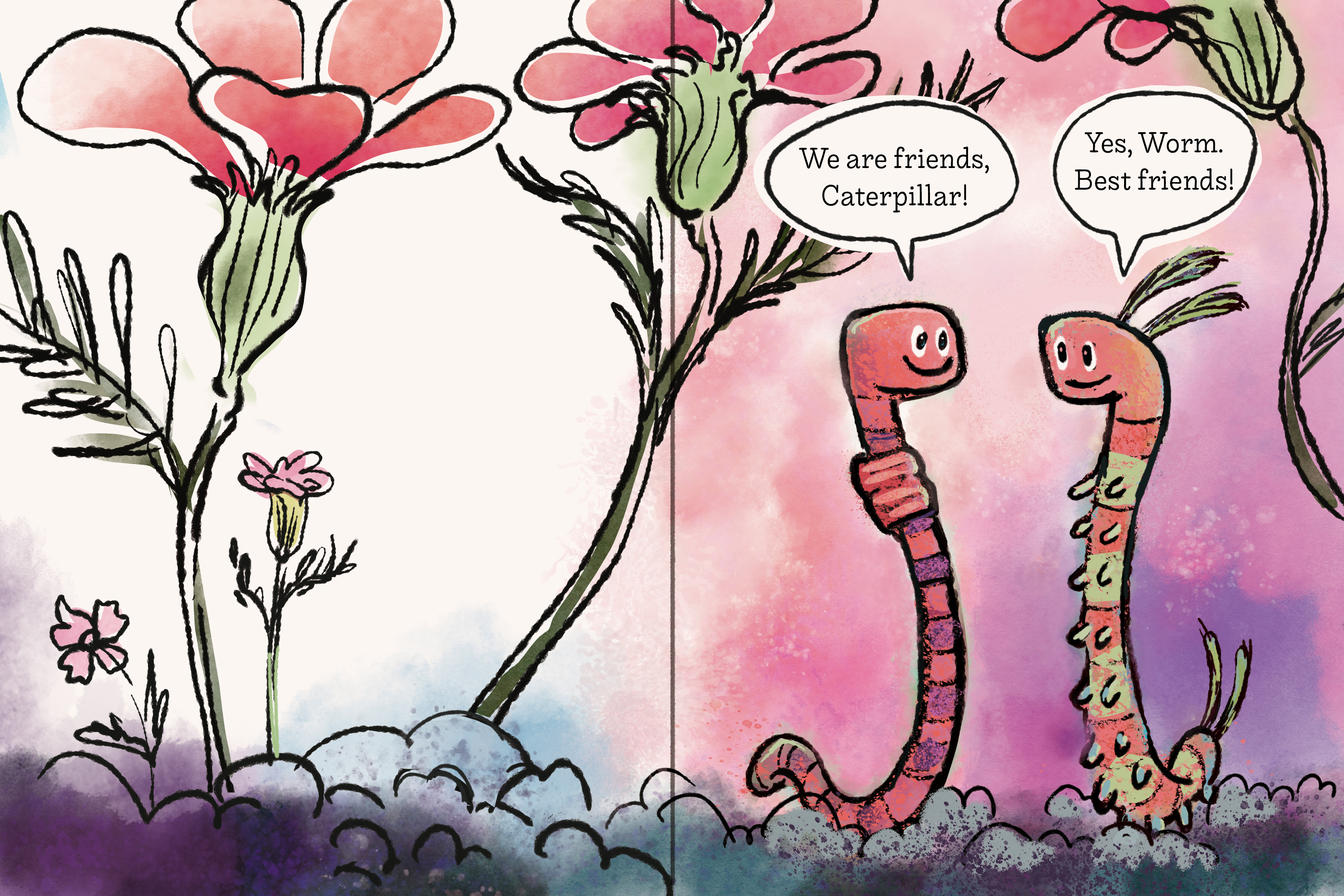
It’s helpful to begin your career illustrating for self-publishing authors who are willing to give you more time to finish a book as you figure out your process and gain the skills to work more efficiently. But make sure you use a good contract! Example:
Once you are into traditionally published book deals, the timeline is much faster and demanding. But you will get the hang of it, I promise!
Happy Illustrating!
Kaz
P.S. A “normal” double-page spread takes me about 2 days to illustrate– anywhere from twelve to twenty hours.
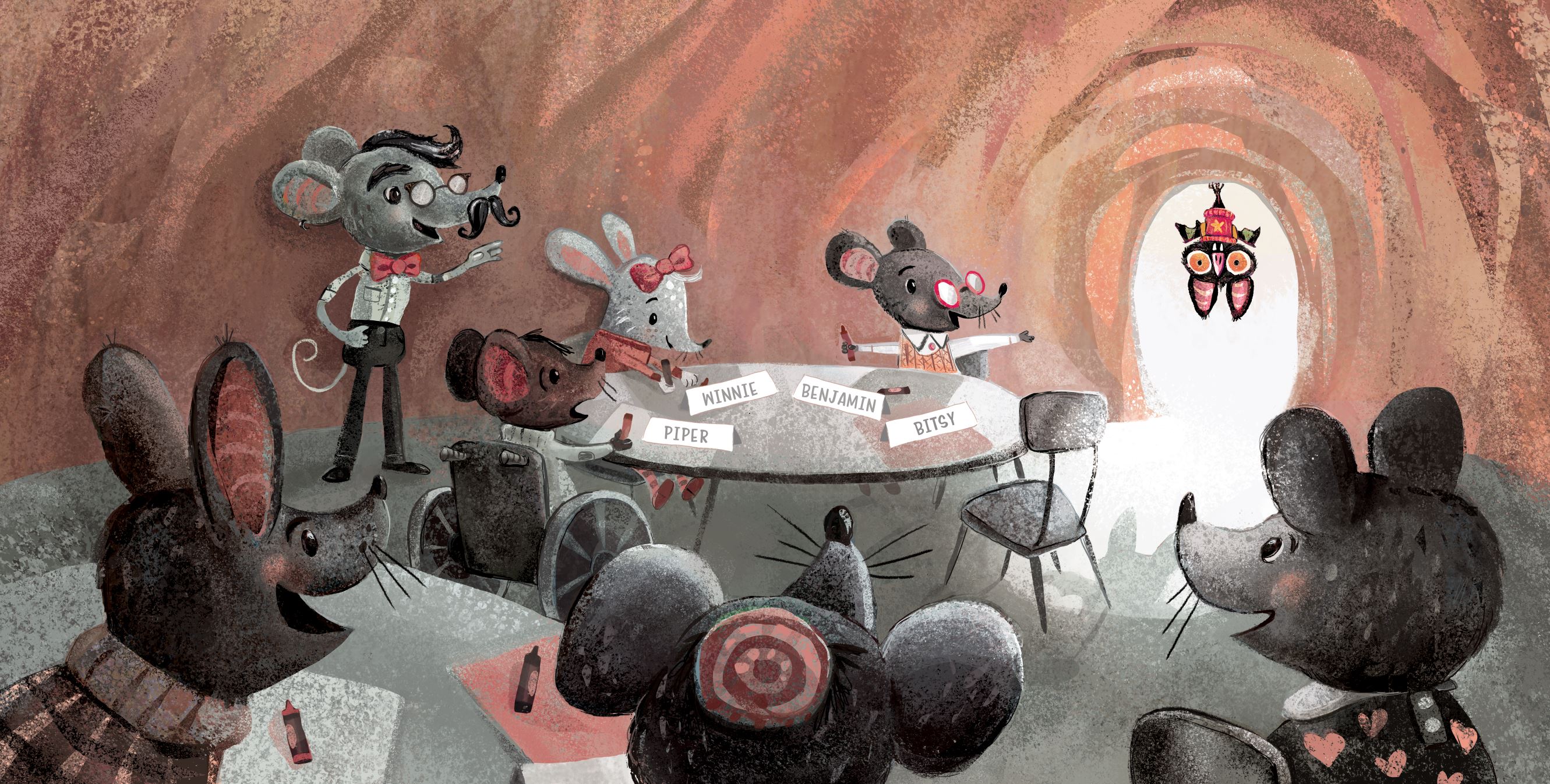
BITSY BAT, SCHOOL STAR dummy book sample of finished artwork.
P.S.S. Remember to follow me on all your favorite social media! https://linktr.ee/KazWindness


Leave a comment